We don’t explore Rewa with a stopwatch in hand or a rigid itinerary pinned to our phones. We arrive curious, unhurried, and open to being surprised. Because Rewa, Madhya Pradesh: Where Waterfalls, Royal Legacies, and Living Culture Converge isn’t a destination that performs on demand—it reveals itself gradually.
Located in the historic heart of Baghelkhand, Rewa feels like a layered manuscript. Turn one page and you’re standing before a thundering waterfall. Turn another and you’re tracing the quiet confidence of a princely court, or walking among ancient Buddhist stupas that predate empires. Geology, royalty, spirituality, and wildlife don’t compete here—they coexist. And honestly? That balance is Rewa’s greatest luxury.
This is a place best experienced slowly. Let the monsoon-fed rivers speak. Let forested plateaus breathe. Let cultural memory—sometimes whispered, sometimes sung—find its way to you.
The Soul of Baghelkhand: Rewa’s Historical Continuum
Long before modern borders and highways, Rewa rose as a powerful princely state under the Baghela dynasty. Politics, poetry, music, and architecture flourished under royal patronage, shaping not just a city, but an entire cultural region of eastern Madhya Pradesh.
Court musicians refined classical traditions. Scholars preserved manuscripts. Architects balanced power with restraint. Even today, there’s a certain composure to Rewa—nothing flashy, nothing forced.
Rewa’s global moment, though, came unexpectedly. When Maharaja Martand Singh introduced Mohan, the first recorded white tiger, the world took notice. Wildlife conservation narratives changed forever. Suddenly, Rewa wasn’t just a royal capital—it became a cornerstone of India’s natural history.
That legacy still echoes, quietly but persistently.
Waterfalls of Rewa: Monumental Landscapes in Motion
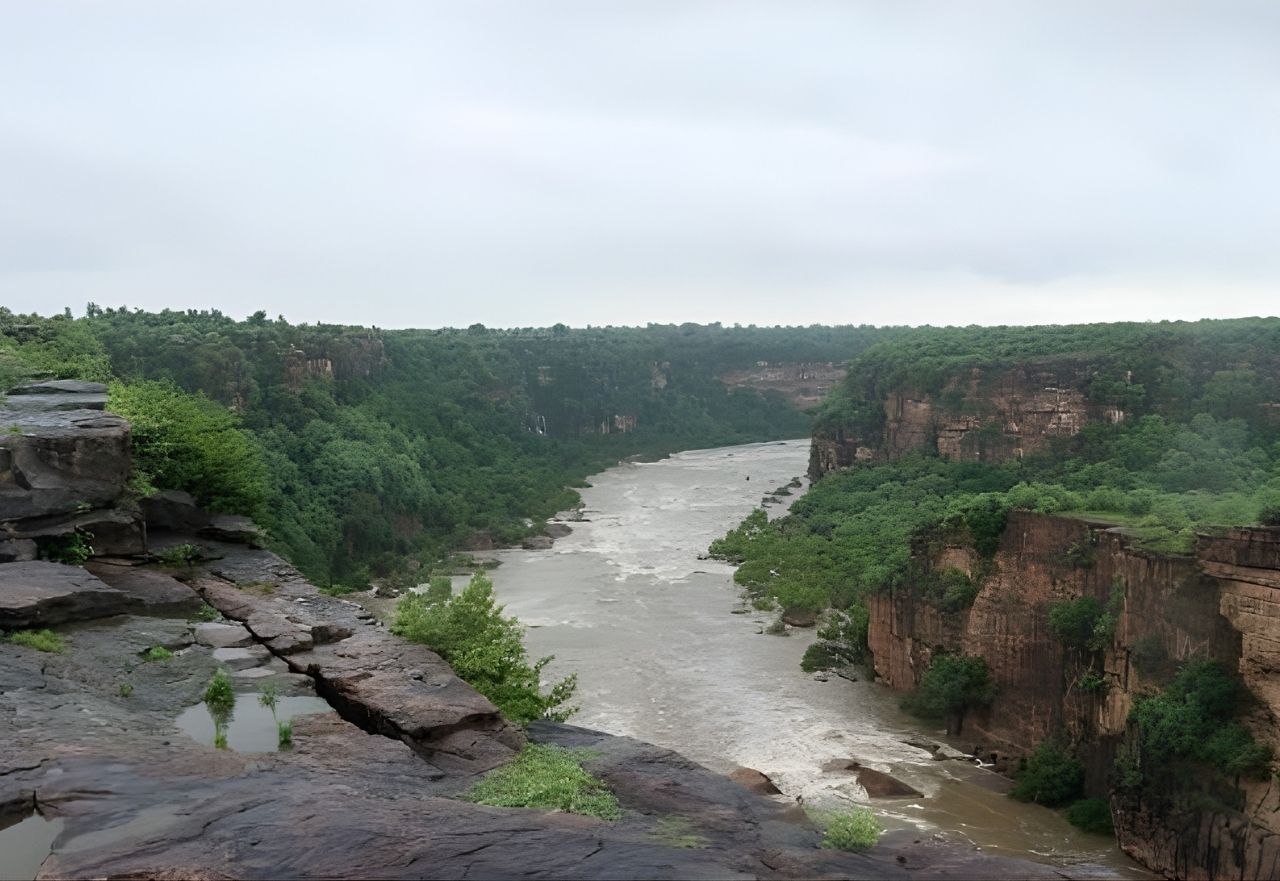
Water doesn’t trickle in Rewa—it announces itself. Especially during the monsoon, when the plateau comes alive and gravity takes over.
Bahuti Falls – The Tallest Cascade in Madhya Pradesh
Plunging nearly 198 metres, Bahuti Falls is the tallest waterfall in the state. Hidden within rugged valleys and raw terrain, it doesn’t make things easy for visitors—and that’s part of the magic.
Reaching Bahuti feels earned. The reward? Untamed wilderness, uninterrupted views, and the humbling realization that nature here still plays by its own rules.
Purwa Falls – Raw Power on the Plateau
When monsoon clouds roll in, Purwa Falls transforms into a roaring force. Water crashes over basalt cliffs, mist hangs heavy in the air, and the forest seems to lean closer.
Accessible yet wild, Purwa is where you feel Rewa’s energy most viscerally. It’s loud. It’s alive. And yes—it’s unforgettable.
Keoti Falls – The Reverse Spray Phenomenon
Dropping almost 130 metres, Keoti Falls is famous for its rare reverse spray. The Mahana River hits the gorge with such velocity that water rebounds upward, forming drifting mist and fleeting rainbows.
Stand at the viewpoint during peak flow and you’ll understand—some spectacles don’t need commentary.
Chachai Falls – Scenic Grandeur and Legacy
Also descending around 130 metres, Chachai Falls offers a broader, theatrical curtain of water. Panoramic viewpoints make it ideal for slow gazing rather than quick photos.
It’s been admired for generations, and you can feel that continuity—nature, witnessed and remembered.
Royal Rewa: Architecture, Power, and Aesthetic Refinement
Rewa Fort and Museum
Anchoring the city is Rewa Fort, an imposing complex overlooking the town. Step inside the museum and you’re surrounded by royal artefacts, arms, manuscripts, and the renowned White Tiger Gallery.
This isn’t nostalgia for nostalgia’s sake—it’s context. The fort connects Rewa’s princely past with its wildlife legacy, seamlessly.
Govindgarh Palace and Lake
About 18 km away lies Govindgarh Palace, once the summer capital of the Rewa royals. The palace overlooks a tranquil lake, its calm surface belying its historical significance.
This is where Mohan, the white tiger, was first identified. Conservation history isn’t abstract here—it’s embedded in geography.
Venkat Bhavan
Built during the reign of Maharaja Venkatraman Singh, Venkat Bhavan showcases intricate golden carvings and refined interiors. A subterranean tunnel once connected it to Rewa Fort, hinting at strategic foresight.
Today, it also houses Kalchuri-era sculptures, bridging multiple centuries in one quiet space.
Sacred Landscapes and Archaeological Memory
Bhairav Baba Temple, Khamdeeh
Serene and slightly surreal, Bhairav Baba Temple Khamdeeh houses a rare 31-foot monolithic idol of Lord Bhairav in a reclining posture. It’s both spiritually powerful and sculpturally unique.
You don’t rush through this space—you absorb it.
Rani Ka Talab
Encircled by chhatris and temples, Rani Ka Talab reflects royal devotion and architectural harmony. Nearby Shiva and Ram–Sita temples add to its contemplative pull.
It’s a place for pauses, not selfies.
Deur Kothar
An essential Buddhist archaeological site, Deur Kothar features Mauryan-era stupas and inscriptions believed to date back to Emperor Ashoka’s reign.
Standing here, you sense how ideas—like compassion and mindfulness—once traveled these routes long before highways existed.
Wildlife Encounters and Slow Travel Experiences
Mukundpur White Tiger Safari
Located near Rewa, Mukundpur White Tiger Safari offers a rare chance to observe white tigers descended from Mohan, alongside rescued exotic species.
The emphasis here is conservation, not spectacle—and it shows.
Village Homestays at Purwa and Godha
Homestays in Purwa and Godha villages redefine what “luxury” means. Think:
- Locally cooked meals
- Forest-edge mornings
- Conversations over chai
- Sustainability over excess
It’s slow travel in its truest form—and yes, it stays with you.
How We Reach Rewa With Ease
- By Air: Rewa Airport offers regional connectivity; major alternatives include Prayagraj and Khajuraho.
- By Rail: Rewa Railway Station connects directly to Bhopal, Jabalpur, Prayagraj, and Varanasi.
- By Road: Well-connected highways link Rewa with Jabalpur (230 km), Prayagraj (130 km), and Bhopal (550 km).
Best Season to Experience Rewa
- Monsoon (July–September): Waterfalls in full force, landscapes at their lushest.
- Winter (October–March): Ideal for heritage walks, safaris, and cultural exploration.
Rewa Travel Circuit Overview (Suggested Flow)
- Rewa City
- Rewa Fort & Museum
- Govindgarh Palace
- Keoti Falls
- Chachai Falls
- Purwa Falls & Village Stays
- Mukundpur White Tiger Safari
- Deur Kothar
FAQs About Rewa, Madhya Pradesh
Is Rewa suitable for slow travel?
Absolutely. In fact, Rewa rewards those who take their time.
How many days are ideal for exploring Rewa?
Three to five days allow a balanced mix of nature, heritage, and culture.
Are waterfalls safe to visit during monsoon?
Yes, with local guidance and caution—monsoon is when they’re most spectacular.
Is Rewa family-friendly?
Very much so, especially with heritage sites and wildlife experiences.
Why Rewa Leaves a Lasting Impression
Rewa isn’t defined by a single monument or moment. Its identity emerges through movement—water carving cliffs, dynasties shaping culture, faith sculpting stone, and conservation redefining legacy.
As regional tourism initiatives gain momentum, Rewa, Madhya Pradesh: Where Waterfalls, Royal Legacies, and Living Culture Converge stands confidently as a destination that doesn’t demand attention—yet commands it.
We don’t just visit Rewa.
We listen to it.