Why Jaipur Is India’s Pink City
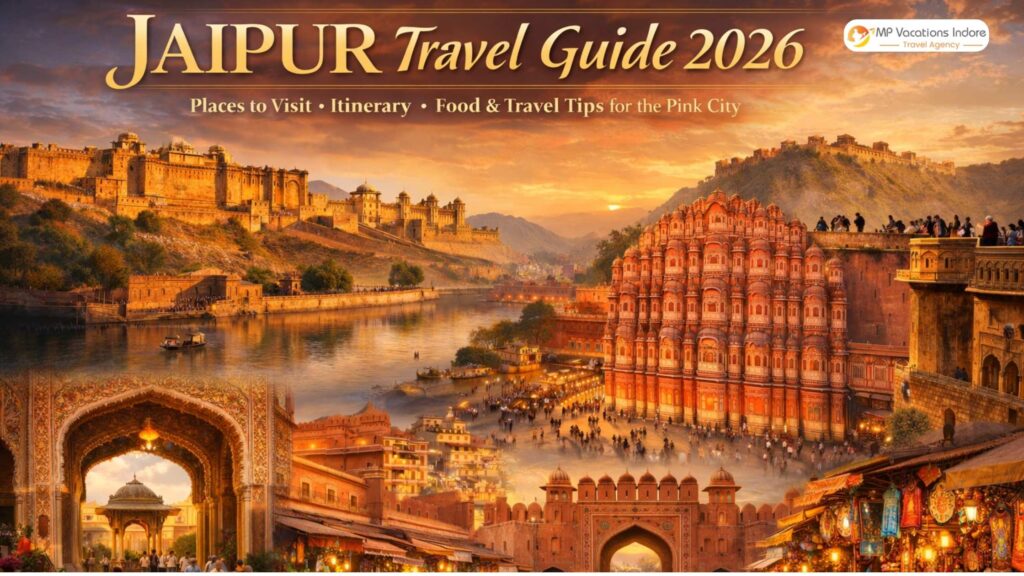
There is a moment, usually sometime in the late afternoon when the light turns amber and the old city walls glow, when Jaipur reveals exactly why it has captivated travellers for nearly three centuries. This is the Pink City of India — not just in name or in the terracotta wash painted across its old city facades, but in spirit. Jaipur is bold, flamboyant, gloriously excessive, and deeply proud of its royal heritage.
Founded in 1727 by the astronomer-king Maharaja Sawai Jai Singh II, Jaipur was one of the first planned cities in Asia. Its wide avenues, colour-coordinated buildings, and grid-like old city were radical innovations at the time — and remain distinctive today. The city earned its famous nickname in 1876 when Maharaja Ram Singh ordered the entire old quarter painted terracotta pink to welcome Prince Albert of Wales. The tradition has held ever since, and by law, buildings in the old walled city must maintain that signature colour.
Today, Jaipur is Rajasthan’s state capital, a UNESCO World Heritage City, and the anchor of India’s famous Golden Triangle (Delhi–Agra–Jaipur). It is also, by almost every measure, the perfect introduction to Rajasthan travel. This Jaipur Travel Guide covers everything you need: the top places to visit in Jaipur, a ready-to-use Jaipur itinerary, the best food the city has to offer, and practical travel tips to make your trip effortless.
For the full picture of your Rajasthan journey, also read our Rajasthan Travel Guide 2026: Places, Itinerary & Tips and our guide to the Best Places to Visit in Rajasthan.
Jaipur at a Glance
| State | Rajasthan, India |
| Nickname | The Pink City |
| UNESCO Status | World Heritage City (inscribed 2019) |
| Best Time | October to March |
| Airport | Jaipur International Airport (JAI) |
| Language | Hindi, Rajasthani, English widely spoken |
| Currency | Indian Rupee (INR) |
| Distance from Delhi | ~270 km (4–5 hrs by road or train) |
Top Places to Visit in Jaipur
Jaipur’s Jaipur tourist attractions are spread across the old walled city, the surrounding hills, and the newer parts of the capital. Allow at least two full days to see the highlights — and more if you want to explore at a genuinely unhurried pace.
1. Amber Fort
Amber Fort is the undisputed crown jewel of the places to visit in Jaipur — and arguably one of the finest fort-palace complexes in all of India. Sitting dramatically on a rocky hilltop 11 km north of the city, above the mirrored surface of Maota Lake, Amber was the capital of the Kachwaha Rajput clan for centuries before Jaipur was founded. Its construction began in 1592 under Maharaja Man Singh I and was expanded and embellished by successive rulers over the next 150 years.
The approach is half the experience: you wind uphill through a series of fortified gates to reach the Jaleb Chowk, the main ceremonial courtyard. From there, a steep staircase leads to the stunning Diwan-e-Aam (Hall of Public Audience), the intimate Ganesh Pol gateway encrusted with painted frescoes, and the Sheesh Mahal — the Hall of Mirrors, whose ceiling is encrusted with thousands of tiny convex mirrors that scatter candlelight like stars. The views back over the lake and the dusty Aravalli plains from the fort’s upper ramparts are breathtaking at any time of day.
Pro Tip Arrive before 9 AM to beat the crowd and the heat. The fort is at its most atmospheric in the soft morning light. Book your entry ticket online to avoid queues.
2. Hawa Mahal — Palace of Winds
The Hawa Mahal is Jaipur’s most iconic facade — a soaring five-storey screen of honeycombed sandstone latticework that has become the symbol of the city. Built in 1799 by Maharaja Sawai Pratap Singh, the palace was designed not as a living space but as a screened gallery from which the royal women of the zenana (the ladies’ quarter) could observe street processions and daily life without being seen themselves. Its 953 small windows — each uniquely carved — also served as natural air conditioning, channelling cool breezes through the palace interior.
Standing on the street outside for the classic photograph is the experience most visitors have, but the interior is well worth exploring too. Climb to the top floors for unexpected views of the City Palace complex and the old city stretching away below. The best light for photography falls in the morning, when the rising sun illuminates the carved facade from the east.
Opening Hours 9:00 AM – 5:00 PM daily. Entry: INR 50 (Indians) / INR 200 (foreigners). Combined tickets available with other monuments.
3. City Palace
The City Palace complex is a living monument — a sprawling ensemble of courtyards, gardens, palaces, and pavilions in the heart of the old walled city that has been the home of Jaipur’s royal family since the city’s founding in 1727. Remarkably, part of the palace remains the private residence of the current Maharaja of Jaipur, Sawai Padmanabh Singh.
The public sections are extraordinary. The Mubarak Mahal (Welcome Palace), built in the late 19th century in an eclectic blend of Rajput, Mughal, and European styles, now houses a textile museum displaying royal costumes, including a pair of garments that once belonged to a Maharaja reputed to have been 2.2 metres tall and 1.2 metres wide. The Diwan-e-Khas (Hall of Private Audience) is home to two enormous silver urns — each over 1.6 metres tall — said to be the largest silver objects in the world, used to carry Ganges water on the Maharaja’s overseas travels.
The Chandra Mahal, the private seven-storey tower at the heart of the complex, can be visited on a special guided tour that takes you through rooms of breathtaking frescoes and royal artefacts not accessible on the standard ticket.
Insider Note Book the ‘Royal Grandeur’ guided tour of the private Chandra Mahal in advance — it sells out quickly and offers access to rooms most visitors never see.
4. Jantar Mantar
Directly adjacent to the City Palace entrance, Jantar Mantar is one of Jaipur’s most underrated wonders — and the one that perhaps best reveals Maharaja Jai Singh II’s extraordinary intellect. Built between 1724 and 1735, this is the largest and best-preserved of the five astronomical observatories he constructed across India. UNESCO inscribed it as a World Heritage Site in 2010.
The observatory contains 19 astronomical instruments, all built in stone and marble at monumental scale. The Samrat Yantra — the world’s largest sundial, standing 27 metres high — can tell the time to within two seconds. Other instruments track the positions of stars, predict eclipses, and calculate the movements of planets with a precision that astonishes modern astronomers. Hire a guide inside: without explanation, the instruments look like abstract sculptures; with it, the genius of their design becomes genuinely mind-blowing.
5. Nahargarh Fort
Perched on the jagged ridge of the Aravalli Hills above the old city, Nahargarh (“abode of tigers”) is the most atmospherically situated of Jaipur’s three hilltop forts. Built in 1734 as a retreat and a defensive stronghold, it offers the finest panoramic views over the Pink City — a sweeping vista of rooftops, minarets, and the City Palace stretching to the horizon. Sunsets from Nahargarh’s terraces are legendary among travellers, and the fort’s rooftop restaurant is one of Jaipur’s most romantic dining spots.
Inside, the Madhavendra Bhawan — a series of identical suites built for the Maharaja and his nine queens, each connected by interior passages but entirely self-contained — is a fascinating study in Rajput domestic architecture and royal hierarchy.
Best Time to Visit Late afternoon into sunset. The drive or trek up the hillside through forested paths is half the pleasure.
6. Jal Mahal — Water Palace
The Jal Mahal is one of the most photographed buildings in Rajasthan — a five-storey pink sandstone palace that appears to float serenely in the middle of Man Sagar Lake, the Nahargarh hills rising behind it. Built in the 18th century as a summer retreat and hunting lodge, four of its five storeys are submerged beneath the lake’s surface, making it a remarkable feat of hydraulic engineering.
The palace is not currently open to the public (restoration work has been ongoing for years), but the lakefront promenade is an excellent spot for photography, birdwatching — the lake attracts large flocks of migratory birds in winter — and a pleasant evening stroll. It sits on the road between the city and Amber Fort, making it easy to include on any Jaipur itinerary.
7. Albert Hall Museum
The Albert Hall Museum, housed in a magnificent Indo-Saracenic building in Ram Niwas Garden south of the old city, is Rajasthan’s oldest museum and one of its finest. Built in 1887 and named after Prince Albert (whose 1876 visit prompted the city’s pink paint job), it houses an extraordinarily rich collection: Rajput miniature paintings, ancient Egyptian mummies, Persian carpets, decorative arts, folk costumes, natural history specimens, and artefacts from across the ancient world.
The building itself — a symphony of arched galleries, ornate facades, and a central tower — is worth visiting for the architecture alone. The museum is particularly magical when it is illuminated in the evenings, its golden sandstone glowing against the night sky.
Things to Do in Jaipur
Beyond the major monuments, the things to do in Jaipur include some of the most enjoyable street-level experiences in all of India.
Explore the Local Bazaars
Jaipur’s markets are among India’s finest, and exploring them on foot is one of the great pleasures of the city. The old city’s main commercial arteries are colour-coded by trade: Johari Bazaar for gemstones and gold jewellery, Bapu Bazaar for block-printed fabrics and mojri (embroidered leather shoes), Tripolia Bazaar for bangles and lac jewellery, and Nehru Bazaar for textiles and souvenirs. The best time to browse is mid-morning before the heat builds.
- Johari Bazaar — coloured gemstones, gold, and silver jewellery
- Bapu Bazaar — block-print fabrics, dupattas, and embroidered leather shoes
- Nehru Bazaar — blue pottery, puppets, and carved marble souvenirs
- Tripolia Bazaar — traditional lac bangles and tribal silver jewellery
Heritage Walks & Photography Tours
Walking the lanes of the old walled city at dawn — when the streets are quiet, shopkeepers are arranging their goods, and temple bells ring through the cool air — is one of Jaipur’s hidden treasures. Several guided heritage walk companies operate morning and evening tours through the old city’s less-visited neighbourhoods, taking in ornate stepwells (baoris), havelis, and street art that most visitors miss entirely.
- Dawn walk through Chandpole and Tripolia gate neighbourhoods
- Sunset photography walk with views of Hawa Mahal from the east
- Amber village walk through the rural communities below the fort
Rooftop Dining & Sundowners
Jaipur has an exceptional rooftop dining scene, with many of the best spots perched inside heritage havelis with views over the old city. From Nahargarh Fort’s Padao restaurant and Bar Palladio’s garden terrace to the rooftop at Peacock Rooftop Restaurant near Hawa Mahal, the city’s elevated eateries are as much about atmosphere as food.
Cultural Shows & Performances
Rajasthani folk culture is best experienced live. Several venues in Jaipur host excellent nightly cultural shows — kachhi ghodi (horse dancing), ghoomar (the swirling folk dance of Rajasthani women), and fire performances — against the backdrop of illuminated fort walls.
- Chokhi Dhani village resort — a full Rajasthani cultural experience with folk performances and traditional food
- Rajasthali handicraft centre — crafts demonstrations and folk dance shows
- Amber Fort sound and light show — held nightly in English and Hindi
Jaipur 2 Day Itinerary
Two days is the sweet spot for Jaipur — enough to cover the essential Jaipur tourist attractions at a comfortable pace without feeling rushed. Here is a tried-and-tested plan:
DAY 1 — Forts, Palaces & the Old City
- Morning: Amber Fort (7:30 AM – 10:00 AM) — Arrive early. Explore the Sheesh Mahal, Ganesh Pol, and the fort ramparts. Jeep up, walk down for exercise and views.
- Mid-Morning: Jal Mahal (10:30 AM) — Stop at the lakeside for photographs en route back to the city.
- Late Morning: Hawa Mahal (11:00 AM – 12:00 PM) — Visit the interior, climb to the upper floors, take your photos from across the street.
- Afternoon: City Palace & Jantar Mantar (1:30 PM – 4:30 PM) — After a lunch break, explore both these adjacent sites with a combined ticket. Budget at least 90 minutes for City Palace and 45 minutes for Jantar Mantar with a guide.
- Evening: Johari Bazaar & dinner (5:00 PM onwards) — Browse the jewellery lanes as they light up for the evening. Dinner at a rooftop restaurant in the old city.
DAY 2 — Hilltop Views, Markets & Local Life
- Morning: Nahargarh Fort (8:00 AM – 10:30 AM) — Drive up the Aravalli ridge for sweeping views over the Pink City. Explore the Madhavendra Bhawan palace interior.
- Mid-Morning: Jaigarh Fort (11:00 AM – 12:30 PM) — Connected to Nahargarh by a walking path along the ridge, Jaigarh houses the world’s largest wheeled cannon and excellent views of Amber below.
- Afternoon: Albert Hall Museum (2:00 PM – 3:30 PM) — Cool off in the air-conditioned galleries with Rajput miniature paintings and royal artefacts.
- Late Afternoon: Bazaar walk (4:00 PM – 6:00 PM) — Explore Bapu Bazaar and Nehru Bazaar for block-print fabrics, blue pottery, and leather goods.
- Evening: Cultural show & farewell dinner — Book the Chokhi Dhani experience for a full Rajasthani cultural evening, or choose a rooftop dinner with fort views.
Best Time to Visit Jaipur
Jaipur is a year-round destination, but the season you choose dramatically changes the experience.
| October – November | Post-monsoon. Green, fresh, warm days (22–30°C). Diwali celebrations make this magical. |
| December – February | Peak season. Cool, dry, and sunny (8–24°C). Book hotels weeks in advance. Best for sightseeing. |
| March | Holi festival transforms the city into a riot of colour — one of India’s great spectacles. Warm but manageable. |
| April – June | Hot (35–45°C). Very few tourists. Budget prices. Avoid midday outdoor activities. Sunrise tours only. |
| July – September | Monsoon season. Dramatic cloudscapes and green landscapes. Occasional heavy rain. Fort visits can be slippery. |
Our recommendation: October to February for first-time visitors, with November in particular offering the ideal combination of comfortable weather, festival atmosphere, and manageable crowds.
Food in Jaipur — What to Eat
Jaipur is a street food lover’s paradise. The city’s culinary tradition draws on the bold spices and preservation techniques of the Rajasthani kitchen — and its famous dishes are unlike anything else in India. For the full culinary tour, read our dedicated Rajasthan Food Guide.
Pyaaz Kachori — The Iconic Jaipur Breakfast
If there is one dish that defines Jaipur’s street food culture, it is the pyaaz kachori. This deep-fried, golden pastry shell is stuffed with a spiced mixture of onions, fennel seeds, and red chilli — crisp on the outside, explosively flavourful within. Served hot with tamarind and mint chutneys, it is the breakfast of choice for locals across the city. The most famous versions are found at Rawat Mishthan Bhandar on Sindhi Camp Road, where queues form before 8 AM.
Dal Baati Churma — The Rajasthani Soul
Dal Baati Churma is Rajasthan’s most celebrated dish, and Jaipur is one of the best places to try a proper version. The baati — hard wheat dumplings baked in a traditional earthen oven until golden and crusty — are cracked open and dunked into a rich five-lentil dal before being drowned in clarified butter. The churma, a crumbled sweet made from crushed baati mixed with jaggery and ghee, completes the trio. This is comfort food, Rajasthani-style: deeply satisfying, intensely aromatic, and best eaten in quantities that require an afternoon nap afterwards.
Ghewar — Jaipur’s Festival Sweet
Ghewar is Jaipur’s most distinctive sweet — a disc-shaped honeycomb of deep-fried flour batter soaked in sugar syrup and topped with reduced milk cream, saffron, and pistachios. It is especially associated with the Teej and Raksha Bandhan festivals (July–August), when sweet shops across the city stack towers of ghewar in their windows, but good versions are available year-round. The best place to try it is at any of the old city’s heritage mithai (sweet) shops, particularly those along Tripolia Bazaar.
Street Food You Must Try
- Mirchi vada — large green chillies stuffed with spiced potato, battered and deep-fried
- Mawa kachori — sweet, nut-stuffed pastry drenched in sugar syrup
- Laal maas — fiery Rajasthani mutton curry, widely available in Jaipur restaurants
- Lassi — thick, chilled yoghurt drink served in clay pots at street corners
- Malpua — soft, syrup-soaked pancakes dusted with crushed pistachios
Travel Tips for Jaipur
Getting There
- By Air: Jaipur International Airport (JAI) has direct flights from Delhi (55 mins), Mumbai (1 hr 45 mins), and several international destinations including Dubai and Singapore.
- By Train: The Shatabdi Express from Delhi (New Delhi station) reaches Jaipur in 4.5 hours — comfortable, affordable, and scenic. Book 2A or CC class for air-conditioning.
- By Road: The NH-48 expressway connects Delhi to Jaipur in approximately 4.5–5 hours by car. Multiple luxury coach operators (RSRTC, HLPL) run the route daily.
Getting Around Jaipur
- Hire a private car with driver for the day — the most convenient option for reaching hilltop forts and multiple monuments (approx. INR 1,200–1,800 for 8 hours).
- Auto-rickshaws for short trips within the old city — always agree the fare before boarding.
- Cycling — the old city’s grid layout makes it surprisingly cycle-friendly in the morning.
- Ola and Uber are widely available in Jaipur and generally reliable.
What to Pack
- Comfortable, closed-toe walking shoes — fort cobblestones are uneven
- Light cotton or linen clothing — the sun is intense even in winter
- A scarf or dupatta for temple visits (covering shoulders and head)
- Cash — many smaller bazaar shops do not accept cards
- Sunscreen and a water bottle — hydration is critical
Cultural Etiquette
- Remove footwear before entering all temples and many heritage guesthouses
- Dress modestly at religious sites — both shoulders and knees should be covered
- Bargaining is expected in bazaars but should be done respectfully
- Photography inside temples is often restricted — always check signage
Practical Notes
- The Jaipur City Pass (available online) covers entry to 7 major monuments and saves significantly on individual ticket prices.
- Amber Fort gets extremely busy by 10 AM. Book timed-entry tickets online.
- Several gem shops near tourist monuments employ aggressive touts — be politely firm.
- Best exchange rates are at authorised money changers in the new city rather than at the airport.
Why Jaipur Is the Perfect Start to Your Rajasthan Journey
Every great Rajasthan trip deserves a great opening chapter — and Jaipur is exactly that. This is a city that grabs you immediately: the scale of Amber Fort as it emerges from the hillside, the improbable architecture of the Hawa Mahal, the glittering chaos of the Johari Bazaar, the smell of pyaaz kachoris frying at dawn. The Jaipur Travel Guide you have just read covers the essential experiences, but the city always holds something more in reserve.
Jaipur’s practical advantages are compelling too. Its excellent airport connections (direct from Delhi, Mumbai, and international hubs), its wide range of accommodation at every budget, and its position at the start of the classic Jaipur–Jodhpur–Jaisalmer or Jaipur–Pushkar–Udaipur routes make it the logical anchor for any Rajasthan itinerary.
Come for the forts. Stay for the food. Leave knowing you have only scratched the surface.
Ready to plan the full trip? Explore our complete Rajasthan Travel Guide 2026: Places, Itinerary & Tips and our guide to the Best Places to Visit in Rajasthan for inspiration and detailed day-by-day planning across the entire state.